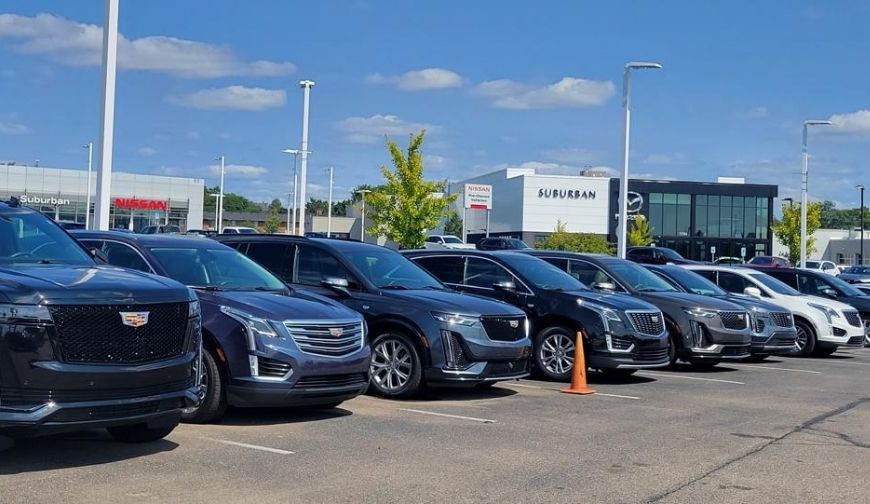


The used car market has experienced its share of difficult periods. Economic recessions, changing interest rates, supply disruptions, inflation, and shifts in consumer demand have all tested independent dealers.
But downturns also provide valuable lessons.
Looking back at previous market cycles shows that successful dealers rarely rely on one strategy. Instead, they adjust inventory, control expenses, watch market data, and protect cash flow.
For independent and Buy Here Pay Here dealers, those lessons remain relevant today.
The Used Car Market Does Not Move in a Straight Line
Used vehicle demand and pricing can change quickly.
During strong markets, dealers may experience high demand and rising vehicle values. During a downturn, consumers can become more cautious, financing can become more expensive, and inventory may take longer to sell.
The 2022 market provides a useful recent example. Cox Automotive reported that total U.S. used-vehicle sales fell 10.6% from 2021 as supply constraints, high prices, inflation, and rising interest rates affected buyers. Subprime and lower-income consumers were particularly affected by affordability pressures.
The lesson is simple: dealers cannot manage today’s inventory using yesterday’s market assumptions.
Lesson 1: Protect Cash Flow
One of the most important lessons from previous downturns is the importance of liquidity.
A dealership can have valuable inventory and still experience financial pressure if vehicles are not selling quickly enough.
During a slower market, dealers may face:
- Longer inventory turn times
- Higher carrying costs
- Lower gross margins
- Increased advertising expenses
- Higher financing costs
- More customer payment pressure
Independent dealers should therefore know exactly how much cash is available and how quickly it is being consumed.
For BHPH dealers, cash-flow management is even more important because revenue from financed vehicles is collected over time.
Lesson 2: Do Not Overpay for Inventory
When vehicle prices are rising, it can be tempting to pay more at auction because dealers believe prices will continue increasing.
A downturn can expose that strategy.
If wholesale values decline after a dealer purchases expensive inventory, the dealership may be forced to reduce its retail price or accept a lower margin.
Past market cycles show why disciplined acquisition is essential.
During the pandemic-era shortage, used vehicle prices increased dramatically because new-vehicle production fell and used inventory became scarce. Cox Automotive reported that the average used vehicle price in 2023 was 35% above its pre-pandemic average.
The lesson: buy for today’s market rather than assuming tomorrow’s market will rescue an expensive purchase.
Lesson 3: Watch Inventory Age
Inventory aging becomes especially important when demand slows.
A vehicle that sells in 20 days during a strong market might take considerably longer during a downturn.
Dealers should monitor inventory by age and have a clear plan for older units.
For example:
0–30 Days: Normal monitoring
31–60 Days: Review pricing and marketing
61–90 Days: Management attention
90+ Days: Consider aggressive action
Holding a vehicle indefinitely because the dealer wants to protect its original gross can result in a larger loss later.
Lesson 4: Used Cars Can Become More Important During a Downturn
The Great Recession demonstrated that used vehicles can become an increasingly important part of dealership operations when new-vehicle sales weaken.
Cox Automotive’s analysis of the Great Recession notes that when new-vehicle sales collapsed, dealers increasingly recognized used cars as an important source of profit.
For independent dealers, this reinforces the importance of having a strong used-car operation even when the overall economy becomes uncertain.
Lesson 5: Affordable Inventory Matters
During difficult economic periods, affordability becomes even more important.
Customers who might have purchased newer vehicles during stronger economic conditions may move toward older or less expensive vehicles.
This can create opportunities for independent dealers with the right inventory.
However, affordable does not mean buying the cheapest vehicle available.
Dealers should consider:
- Purchase price
- Reliability
- Repair requirements
- Customer demand
- Expected selling price
- Financing structure
- Expected payment
Lesson 6: Supply Problems Can Create Unexpected Challenges
Downturns do not always mean there will be plenty of inexpensive inventory.
The pandemic showed the opposite.
New-vehicle production disruptions reduced the number of vehicles eventually entering the used market. Cox Automotive estimated that production losses during 2020–2022 would result in millions fewer vehicles entering the used market later.
This created a situation where demand remained strong while supply was unusually tight.
Dealers should therefore watch both sides of the market:
Consumer demand
and
Vehicle supply
Either one can change dealership economics.
Lesson 7: BHPH Dealers Need to Watch Payment Affordability
For BHPH dealerships, market downturns can create a second problem.
The customer may already have a limited budget.
If inflation increases household expenses or financing costs rise, customers may have less money available for vehicle payments.
Cox Automotive found that rising interest rates, high vehicle prices, and inflation placed particular pressure on subprime and lower-income used-vehicle buyers during 2022.
BHPH dealers should therefore pay close attention to:
- Payment size
- Down payment
- Income stability
- Delinquency
- Payment frequency
- Customer communication
Lesson 8: Collections Become More Important
A downturn can increase financial pressure on customers.
That makes early communication important.
Dealers should monitor accounts rather than waiting for a customer to become seriously delinquent.
Useful processes include:
- Payment reminders
- Early delinquency contact
- Account reviews
- Documented customer communication
- Payment arrangements when appropriate
- Consistent collection procedures
Strong collections are not simply about recovering missed payments. They are about identifying problems early.
Lesson 9: Technology Can Help Dealers Adapt
One interesting lesson from the Great Recession was how quickly dealers adopted online vehicle auctions and digital purchasing tools.
Cox Automotive reported that the recession accelerated the use of online auctions because dealers had to reduce travel and find alternative ways to acquire inventory.
The broader lesson is that difficult markets can accelerate technological change.
Today’s dealers can use technology for:
- Online inventory sourcing
- Digital advertising
- Customer follow-up
- Electronic payments
- Portfolio monitoring
- Pricing analysis
- Inventory aging
- Market comparisons
Lesson 10: Do Not Depend on Gross Profit Alone
A vehicle can generate an attractive front-end gross and still produce a poor overall result.
Dealers should consider the complete economics of each unit.
That includes:
Acquisition Cost
Transportation
Reconditioning
Advertising
Floorplan or Financing Cost
Time in Inventory
Expected Gross
Potential Loss
This becomes especially important when vehicle values are changing quickly.
Lesson 11: Market Data Should Drive Purchasing
During a downturn, instinct becomes less reliable.
Dealers should monitor actual market information.
Useful measurements include:
- Current wholesale values
- Retail asking prices
- Days to market
- Conversion rates
- Inventory supply
- Local demand
- Vehicle-specific pricing
- Historical sales performance
The objective is to understand what is happening now, not what happened three months ago.
Lesson 12: Reconditioning Needs Discipline
Reconditioning is another area where dealers can lose money during a slow market.
A dealer may spend heavily preparing a vehicle for sale and then discover that the market price does not support the investment.
A clear recon process should establish:
- Maximum recon budget
- Required repairs
- Cosmetic standards
- Expected retail value
- Target time to frontline
The goal should be to make every vehicle retail-ready without unnecessarily over-investing in it.
Lesson 13: Diversify Inventory
A downturn can affect vehicle segments differently.
One category may experience falling demand while another remains relatively strong.
Dealers should avoid becoming overly dependent on a single type of vehicle.
Monitor demand for:
- Sedans
- SUVs
- Trucks
- Crossovers
- Fuel-efficient vehicles
- Older affordable vehicles
The right mix depends heavily on the local market.
Lesson 14: Be Careful With Expansion
Strong markets can encourage dealerships to expand quickly.
More inventory, additional locations, larger teams, and greater borrowing can all increase exposure when conditions change.
During uncertain periods, controlled growth may be safer than aggressive expansion.
Before expanding, dealers should evaluate:
- Cash reserves
- Inventory turn
- Portfolio performance
- Debt obligations
- Staffing
- Local demand
Lesson 15: Downturns Can Create Buying Opportunities
A difficult market is not necessarily bad for every dealer.
Dealers with strong cash positions can sometimes find opportunities when competitors need to reduce inventory or when wholesale prices become more attractive.
But buying opportunities should still meet the dealership’s normal acquisition standards.
A lower price does not automatically make a bad vehicle a good vehicle.
Lesson 16: Reputation Matters More During Difficult Times
When customers are under financial pressure, transparency becomes increasingly important.
Dealers should clearly communicate:
- Vehicle price
- Financing terms
- Required fees
- Payment schedule
- Customer responsibilities
- Warranty or service terms
Clear communication can reduce misunderstandings and help protect long-term customer relationships.
What the Great Recession Taught Dealers
The Great Recession remains one of the most useful examples for understanding how dealerships can respond to major economic disruption.
Cox Automotive’s historical analysis found that the recession accelerated changes in used-car operations, fixed operations, and Internet-based dealership practices.
It also highlighted an important strategic shift.
When new-car sales weakened, dealers had to focus more closely on the areas of their businesses that actually produced profits.
For many dealers, used vehicles became a central part of that strategy.
What the Pandemic Market Taught Dealers
The pandemic created a completely different type of market.
Instead of a traditional demand collapse, the industry experienced production shutdowns, inventory shortages, unusually strong demand, and rapidly increasing used-vehicle prices.
Cox Automotive reported that new-vehicle inventory fell dramatically during 2020–2021, creating a shortage that later affected used-vehicle supply.
The lesson is that dealers should prepare for different types of market disruptions rather than assuming every downturn will look the same.
A Downturn Playbook for Independent Dealers
When market conditions begin weakening, dealers can use a simple framework.
Step 1: Review Inventory
Identify aged and slow-moving vehicles.
Step 2: Review Pricing
Compare current market prices rather than relying on original acquisition assumptions.
Step 3: Protect Cash
Reduce unnecessary expenses and monitor financing costs.
Step 4: Tighten Purchasing
Buy fewer vehicles if necessary and focus on units with strong demand.
Step 5: Monitor Customers
For BHPH operations, watch delinquency and payment behavior closely.
Step 6: Review Marketing
Move advertising toward vehicles and customer segments producing the strongest results.
Step 7: Use Data
Make purchasing and pricing decisions based on current market information.
Downturn Checklist
☐ Review inventory age
☐ Reprice aging units
☐ Reduce unnecessary recon spending
☐ Monitor wholesale values
☐ Review cash reserves
☐ Monitor financing costs
☐ Tighten acquisition criteria
☐ Review customer affordability
☐ Monitor BHPH delinquency
☐ Strengthen collections
☐ Review advertising performance
☐ Track local market demand
☐ Evaluate expansion plans
☐ Maintain strong customer communication
Final Thoughts
Past used-car market downturns show that successful dealers do not simply wait for conditions to improve.
They adapt.
The Great Recession demonstrated the importance of used vehicles, disciplined operations, and technology. The pandemic demonstrated how quickly supply disruptions can transform vehicle pricing and availability. More recently, the 2022 slowdown showed how inflation, high vehicle prices, and rising interest rates can put significant pressure on used-car buyers, particularly those with lower incomes or weaker credit.
For independent and BHPH dealers, the most valuable lesson is discipline.
Buy carefully. Watch inventory. Protect cash. Understand customer affordability. Control reconditioning. Monitor the portfolio. And make decisions using current market data.
A downturn may reduce opportunities for some dealers, but it can also reward dealerships that are prepared, flexible, and financially disciplined.
This article is for general informational purposes and is not legal, financial, or investment advice. Dealers should consult qualified professionals regarding their specific business and financial circumstances.
Frequently Asked Questions
What can independent dealers learn from past market downturns?
Dealers can learn the importance of cash-flow management, disciplined inventory acquisition, accurate pricing, customer affordability, and adapting quickly to changing market conditions.
Did the Great Recession affect used car dealers?
Yes. The recession significantly changed dealership operations and encouraged many dealers to place greater emphasis on used vehicles and other profitable departments.
How did the pandemic affect the used car market?
Production shutdowns and supply-chain disruptions reduced new-vehicle production, which later contributed to lower used-vehicle supply and unusually high used-car prices.
Why are downturns particularly important for BHPH dealers?
BHPH dealers carry both vehicle and credit risk. When customers face financial pressure, delinquency can increase while inventory and financing costs can also affect dealership cash flow.
Should dealers buy more inventory during a downturn?
Not automatically. Dealers should purchase based on current demand, vehicle quality, acquisition cost, expected retail value, and available cash.