
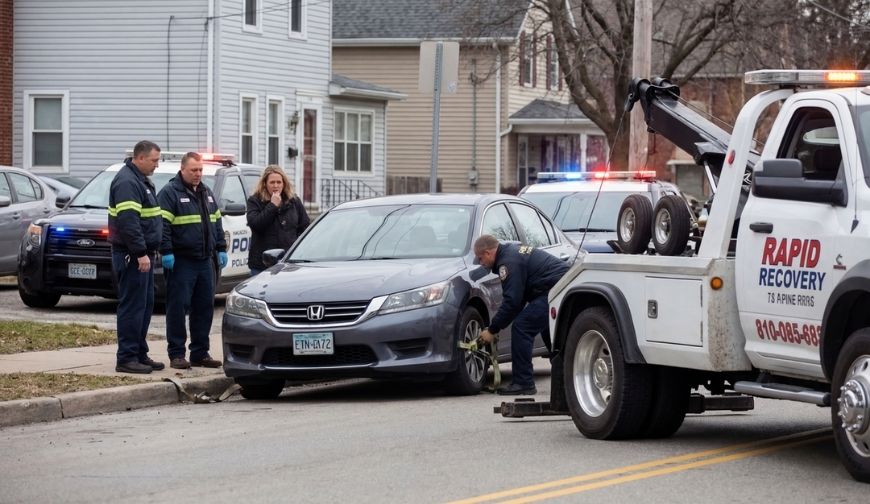
Vehicle repossession is an important part of managing delinquent accounts for many Buy Here Pay Here (BHPH) dealerships. However, taking possession of a vehicle after a customer defaults is not simply a matter of sending a tow truck.
Repossession requirements can vary from state to state. Dealers may need to consider rules involving default, notices, peaceful repossession, personal property, vehicle sales, deficiency balances, and the customer’s opportunity to redeem or reinstate the agreement.
For BHPH dealers that finance customers directly, understanding these requirements can help create consistent procedures and reduce unnecessary compliance risks.
Important: This article provides general information and is not legal advice. Repossession requirements can change and may depend on the state, contract, transaction, and specific circumstances. Dealers should verify current requirements with the appropriate state authority and qualified legal counsel.
What Is Vehicle Repossession?
Vehicle repossession generally occurs when a customer defaults on a secured financing agreement and the creditor takes possession of the vehicle that serves as collateral.
A missed payment is a common example of default, but the specific definition of default should be reviewed in the customer’s contract and under applicable state law.
The Federal Trade Commission explains that, in many states, a lender may be able to repossess a vehicle after default without first going to court or providing advance notice, provided the repossession does not breach the peace.
For dealers, this does not mean every repossession can be handled the same way. State-specific requirements still matter.
Why Repossession Laws Matter to BHPH Dealers
BHPH dealers often manage the entire relationship with a customer, from vehicle sale and financing through payment collection and, when necessary, repossession.
That makes a consistent repossession process particularly important.
Dealers should have documented procedures covering:
- Identifying when an account is in default
- Reviewing the customer’s contract
- Confirming applicable state requirements
- Authorizing a repossession
- Selecting qualified repossession providers
- Avoiding a breach of the peace
- Handling personal property
- Providing required notices
- Preparing the vehicle for sale
- Applying sale proceeds
- Handling deficiency or surplus amounts
- Maintaining complete records
A standardized process can help employees avoid making decisions based solely on individual circumstances.
Can a Dealer Repossess a Vehicle Without a Court Order?
In many states, a creditor may be able to repossess a vehicle without first obtaining a court order after a borrower defaults.
However, self-help repossession generally cannot involve a breach of the peace. The FTC notes that physical force, threats of force, or certain methods of taking a vehicle can create a breach-of-peace issue.
Dealers should therefore make sure their employees and repossession contractors understand when they must stop and seek another legal process.
A dealership should never assume that a repossession is lawful simply because the customer has missed a payment.
What Does “Breach of the Peace” Mean?
The exact definition can depend on state law and the circumstances.
Generally, a repossession should not involve:
- Physical confrontation
- Threats or intimidation
- Violence
- Breaking into a locked structure
- Other conduct that creates a confrontation
If a repossession cannot be completed peacefully, the dealer should follow the appropriate legal process rather than instructing a repossession agent to force the issue.
This is one reason why BHPH dealers should carefully select and train repossession vendors.
Do Dealers Have to Give Notice Before Repossession?
There is no single nationwide notice rule that applies to every vehicle repossession.
Some states may allow repossession after default without advance notice, while other state laws can impose additional notice or cure requirements. The CFPB similarly notes that many states permit repossession without a warning or court order, while others require notice before repossession.
Dealers should therefore determine:
- What constitutes default
- Whether a pre-repossession notice is required
- Whether the customer receives a cure period
- What information the notice must contain
- How the notice must be delivered
- Whether additional notices are required after repossession
The customer’s contract should also be reviewed as part of the process.
State-by-State Differences Matter
There is no single repossession procedure that dealers can safely apply across all 50 states.
State law can affect:
- When a vehicle may be repossessed
- Whether advance notice is required
- Whether a customer has a right to cure
- How a repossession must be conducted
- What happens to personal property
- Notice requirements before a sale
- Redemption rights
- Reinstatement rights
- Deficiency balances
- Surplus proceeds
For example, Massachusetts has specific statutory provisions addressing repossession and cure rights, while states such as Texas generally follow different rules concerning self-help repossession. Current state-level references demonstrate how these requirements can differ significantly.
For that reason, dealers should maintain a state-specific repossession compliance checklist rather than relying on one nationwide procedure.
What Happens After a Vehicle Is Repossessed?
Repossession is not necessarily the end of the customer’s contractual obligations or the dealer’s responsibilities.
After taking possession, the creditor may need to determine how the vehicle will be handled.
Depending on applicable law and the agreement, the process can include:
- Securing the vehicle
- Documenting its condition
- Handling personal property
- Sending required notices
- Providing redemption or reinstatement opportunities when applicable
- Preparing the vehicle for sale
- Conducting a commercially reasonable sale
- Applying sale proceeds to the debt
- Calculating any deficiency or surplus
- Maintaining transaction records
The FTC explains that after repossession, a lender may sell the vehicle and, depending on state law, the customer may have rights concerning the sale and the remaining balance.
Handling Personal Property Left in the Vehicle
Customers may leave personal belongings inside a repossessed vehicle.
Dealers should have a written procedure for identifying, securing, documenting, and returning those belongings.
State laws can determine how long property must be retained and what notices must be provided.
Employees should avoid simply throwing away or selling personal property without first determining what the applicable law requires.
Selling a Repossessed Vehicle
After repossession, the vehicle may be sold to recover the amount owed, subject to applicable law.
The sale process is important because the proceeds can affect the customer’s remaining balance.
Dealers should document:
- Vehicle condition
- Repairs or preparation
- Sale price
- Sale expenses
- Date and method of sale
- Amount applied to the customer’s account
- Remaining balance
- Any surplus
The sale should be handled in accordance with applicable state requirements and the underlying agreement.
What Is a Deficiency Balance?
A deficiency balance is generally the amount that remains after the proceeds from the sale of a repossessed vehicle are applied to the debt and allowable expenses.
For example, suppose a customer owes $15,000 and the vehicle is sold for $10,000 after a repossession. If applicable costs and other contractually permitted amounts are included, the remaining amount may become a deficiency balance.
Whether and how a dealer can collect a deficiency depends on applicable law and the circumstances of the transaction.
The FTC notes that in most states, creditors may be able to pursue a deficiency if they follow the applicable repossession and sale requirements.
What Happens If the Vehicle Sells for More Than the Debt?
A repossession can sometimes produce a surplus rather than a deficiency.
If the vehicle sale generates more money than is needed to satisfy the secured debt and allowable expenses, applicable law may require the remaining amount to be paid to the customer.
Dealers should therefore maintain accurate records of every repossession sale and how the proceeds were distributed.
Reinstatement vs. Redemption
Dealers should understand the difference between these concepts because state laws may treat them differently.
Reinstatement
Reinstatement generally allows a customer, when applicable, to bring the account current by paying the overdue amounts and certain permitted costs.
Redemption
Redemption generally involves paying the amount required to recover the vehicle, which may include the full secured obligation and permitted expenses.
Not every state provides the same rights, and the timing and requirements can vary.
Dealers should verify the applicable state rules before telling a customer what is required to recover a vehicle.
Repossession and Electronic Vehicle Disablement
Some dealers and lenders use electronic devices that can disable a vehicle or prevent it from starting when payments are delinquent.
The legality and treatment of these devices can vary based on the contract and state law. The FTC has also noted that vehicle-disablement technology can raise unfair or deceptive conduct concerns depending on how it is used.
Dealers using these technologies should have clear policies covering:
- Customer disclosures
- When the device can be activated
- Safety considerations
- Payment status
- Disabling and re-enabling procedures
- Applicable state requirements
Best Practices for BHPH Repossession Compliance
A strong repossession program should be consistent, documented, and reviewed regularly.
Create a Written Repossession Policy
Your policy should explain who can authorize a repossession, what documentation is required, and which steps employees must follow.
Use State-Specific Checklists
Don’t assume the same process works in every state.
Maintain separate checklists for states where your dealership operates.
Train Employees
Employees should understand default procedures, customer communications, repossession authorization, and escalation requirements.
Carefully Manage Repossession Vendors
If you use third-party repossession companies, verify that they understand the requirements applicable to the locations where they operate.
Document Everything
Keep records of:
- Payment history
- Default notices
- Customer communications
- Repossession authorization
- Vendor communications
- Vehicle condition
- Personal property
- Required notices
- Sale documents
- Sale proceeds
- Deficiency calculations
Good documentation can make it easier to investigate complaints and demonstrate that established procedures were followed.
Common Repossession Mistakes Dealers Should Avoid
Using the Same Procedure in Every State
State requirements can differ, so a nationwide one-size-fits-all process can create unnecessary risk.
Ignoring the Contract
The customer’s financing agreement should be reviewed before taking action.
Allowing a Confrontation
If a repossession becomes confrontational, the dealer or repossession agent should not escalate the situation.
Forgetting Post-Repossession Requirements
Repossession does not end the compliance process. Notices, personal property, sale procedures, and accounting may still be required.
Poor Recordkeeping
Missing documentation can make it difficult to demonstrate what happened during a repossession.
BHPH Repossession Compliance Checklist
Before completing a repossession, dealers should consider:
☐ Confirm the account is in default
☐ Review the financing agreement
☐ Verify applicable state requirements
☐ Determine whether notice is required
☐ Confirm any cure period
☐ Authorize the repossession
☐ Use an appropriate repossession provider
☐ Avoid breach of the peace
☐ Secure and document the vehicle
☐ Handle personal property correctly
☐ Send required post-repossession notices
☐ Follow applicable sale requirements
☐ Calculate the deficiency or surplus
☐ Maintain complete records**
Final Thoughts
Repossession laws by state can be complex, particularly for BHPH dealers that manage both vehicle sales and customer financing.
The most important takeaway is that a dealer should not assume that a procedure that works in one state will automatically work in another. Requirements concerning notice, cure rights, repossession methods, vehicle sales, deficiencies, and customer protections can vary.
A well-designed compliance program should combine the dealership’s contracts and policies with current state requirements and appropriate legal guidance.
For BHPH dealers, the goal should be a repossession process that is consistent, documented, respectful, and legally compliant.
Dealer Business Journal provides independent and Buy Here Pay Here dealers with practical information on compliance, financing, operations, and other issues affecting automotive retail.
Frequently Asked Questions
Can a BHPH dealer repossess a vehicle without going to court?
In many states, a creditor may be able to use self-help repossession after default without obtaining a court order, provided the repossession complies with applicable law and does not breach the peace. State-specific requirements should always be reviewed.
Do all states require a repossession notice?
No. Notice and cure requirements vary by state. Dealers should verify the requirements that apply to the specific transaction and location.
Can a dealer collect a deficiency after repossession?
In many states, a creditor may be able to pursue a deficiency after a properly conducted repossession and sale, but state law and the circumstances of the transaction matter.
What should dealers do with personal belongings found in a repossessed vehicle?
Dealers should secure and document the property and follow applicable state requirements for notifying the customer and returning the belongings.
Should BHPH dealers have a written repossession policy?
Yes. A written policy can help employees and repossession vendors follow consistent procedures and can make it easier to identify and correct compliance problems.